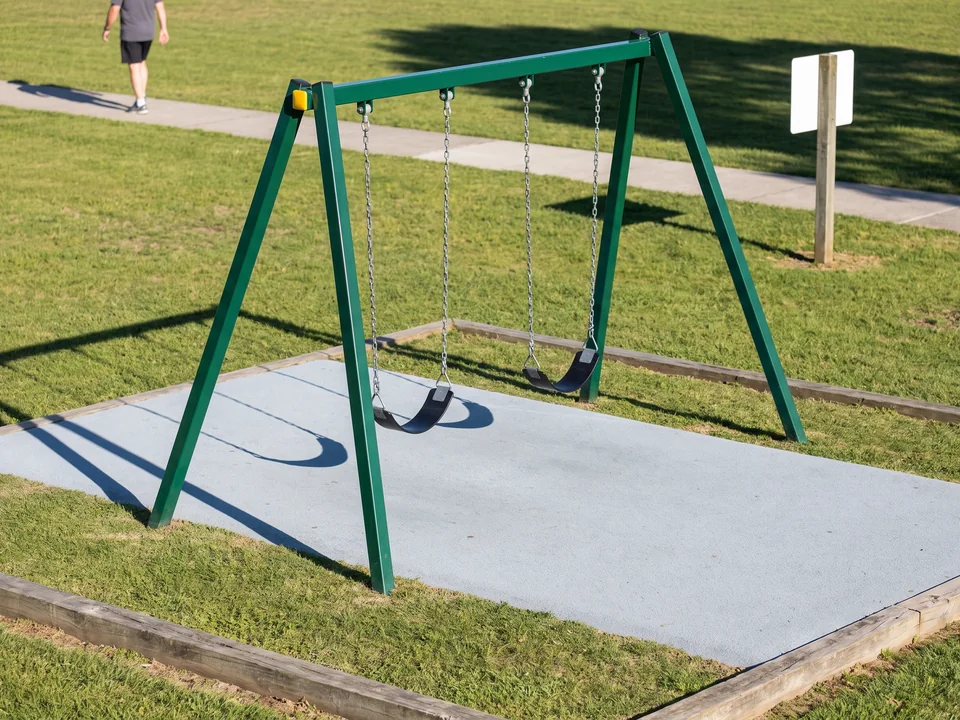
A-frame swing sets
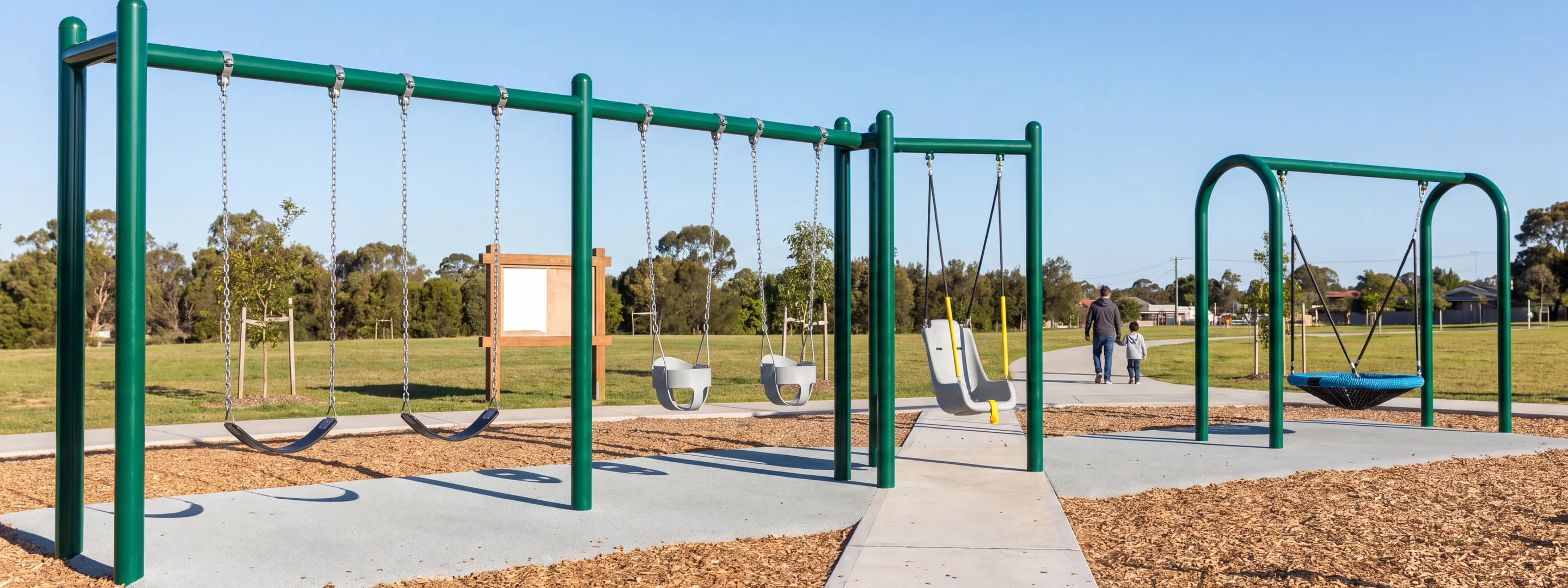
Ø114 × 3.0 mm · angled legs · 1, 2 or 3 baysAngled legs at each end of the top beam. Reads as the classic park swing; suits open lawns with room around the ends.
In-house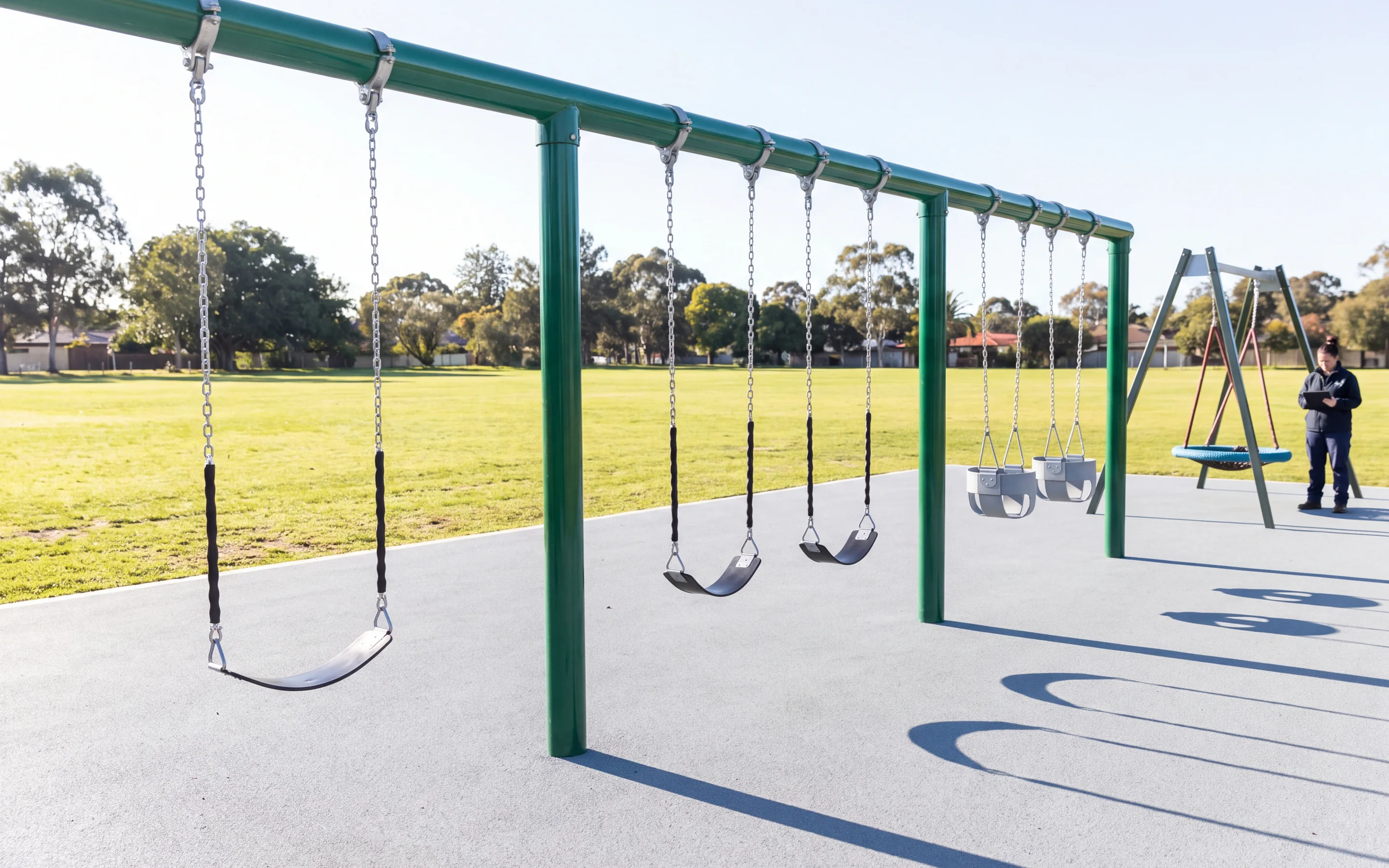
A-frame and straight-post frames in 1, 2 or 3 bays, two seats per bay: belt, toddler bucket, inclusive high-back and nest seats, each placed bay by bay on your site layout.
These commercial swing sets are A-frame and straight-post swing frames in 1, 2 or 3 bays, with Ø114 mm galvanized, powder-coated top beams and posts, sealed-bearing hangers and hot-dip galvanized chains.
They carry belt seats, full-bucket toddler seats, inclusive high-back seats with harness and nest swings. Every frame is drawn on your layout, pre-assembled before packing, and numbered so any hanger or seat can be reordered by part number.
Part of the commercial playground equipment line · same layout, footing drawings and container plan as your structures, slides and surfacing
Angled legs at each end of the top beam. Reads as the classic park swing; suits open lawns with room around the ends.
In-house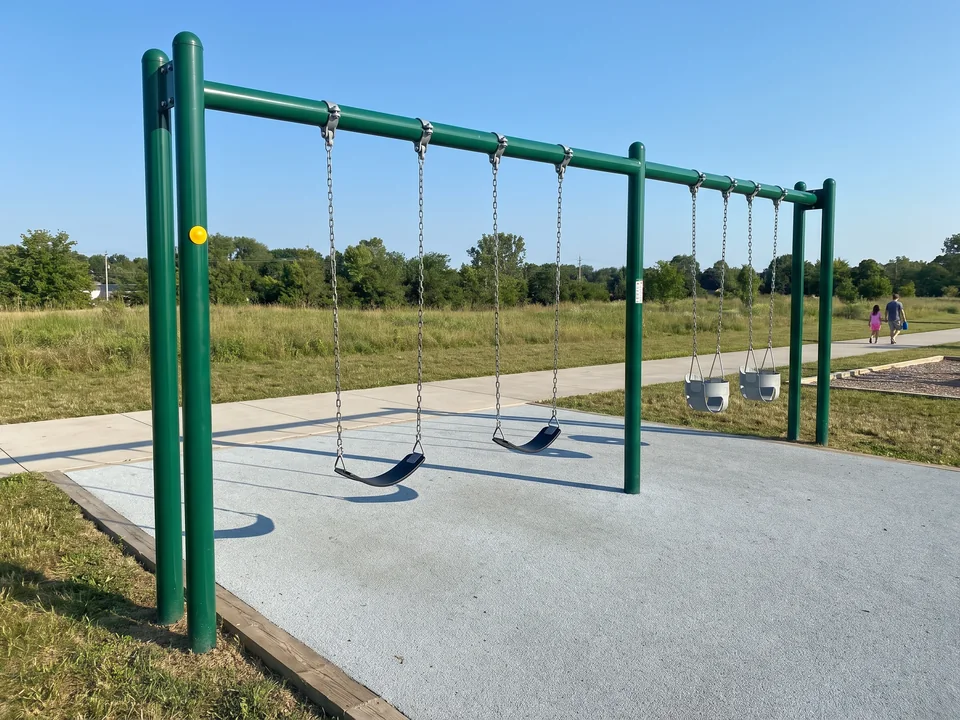
Upright posts under the beam. Less ground at the ends, for tighter sites and a cleaner line along paths.
In-house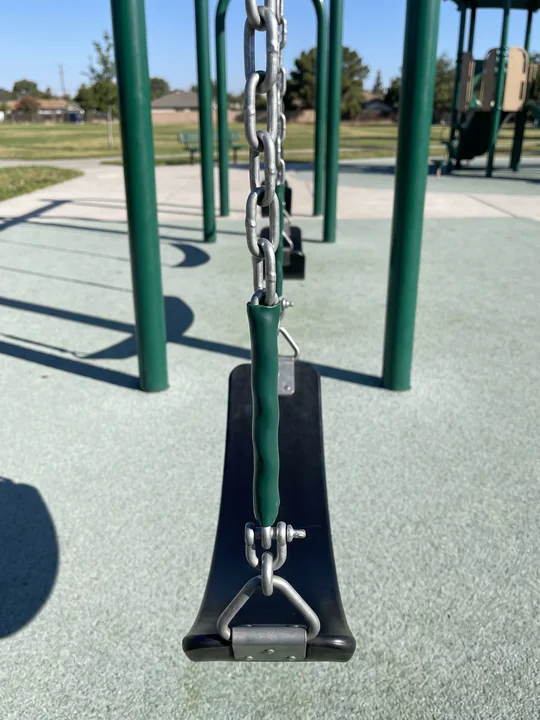
For 5–12 zones, two per belt bay.
5–12Partner-built · QC inspected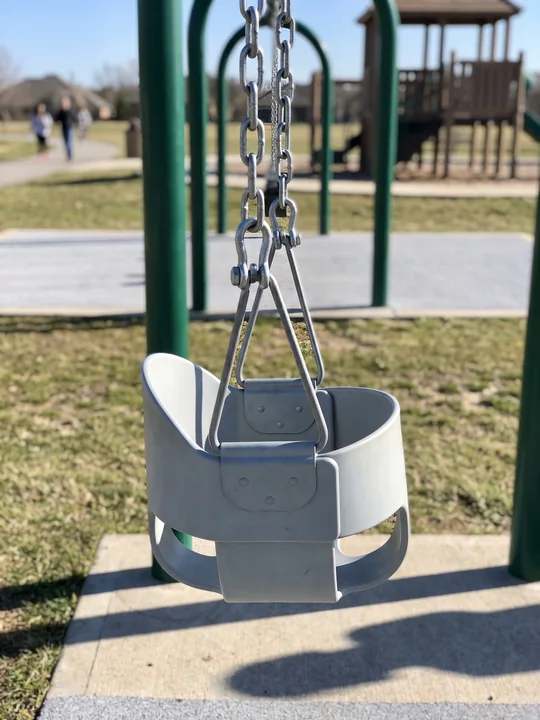
For the youngest children, daycare and 2–5 zones.
6–23 mo · 2–5Partner-built · QC inspected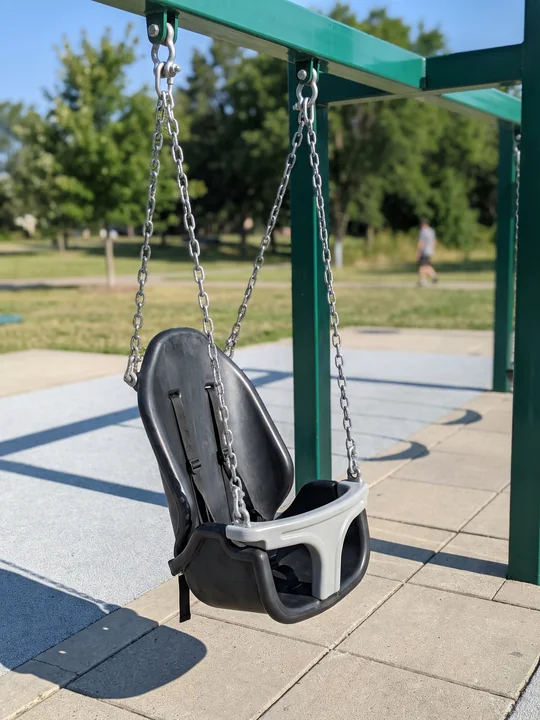
Supported seating for children who need back and side support.
Supported seatingPartner-built · QC inspected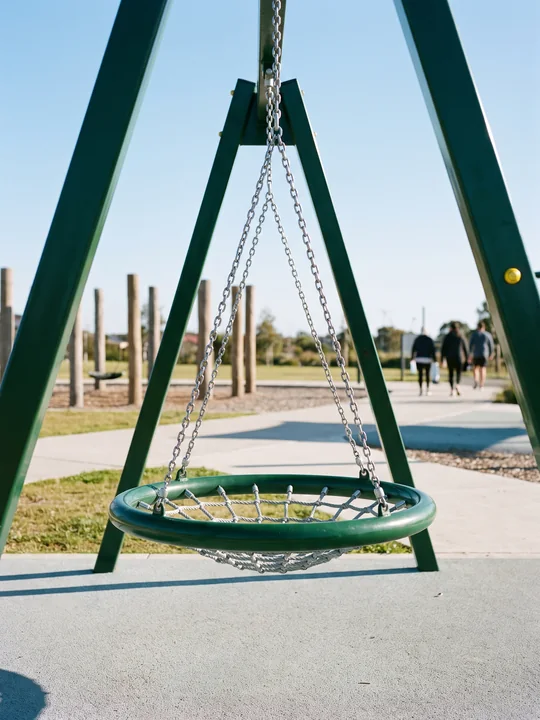
From our rope line on a padded steel ring, multi-point hung, on a frame of its own.
Shared playIn-house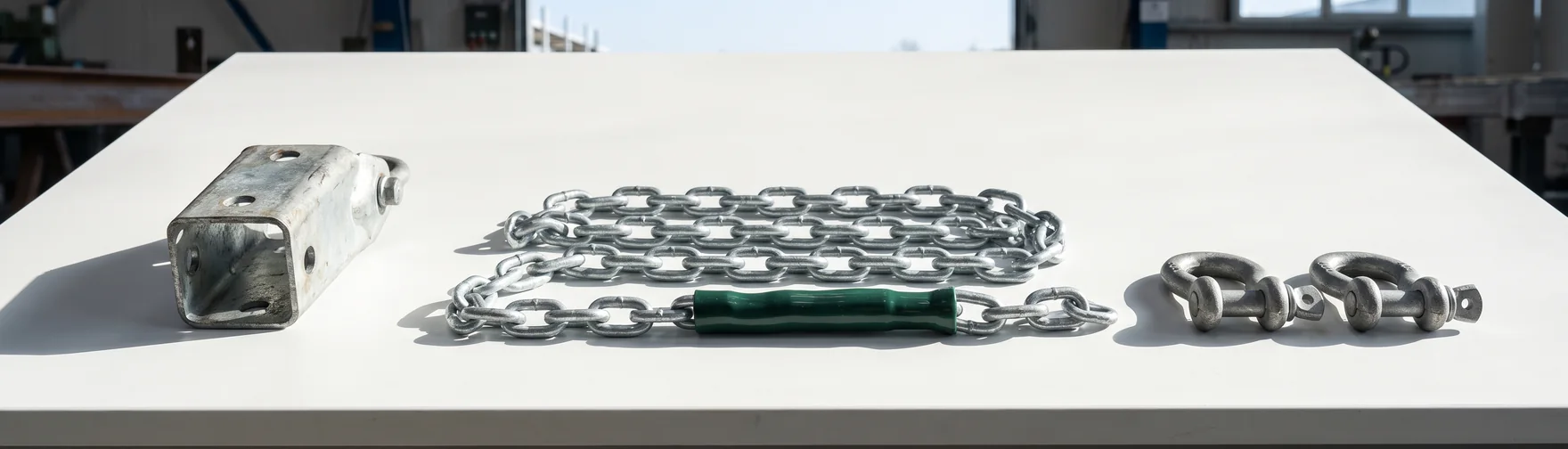
Galvanized hanger housing on a sealed bearing, clamped around the beam.
The coated grip covers the hand-hold length of the chain.
Chain to hanger at the top, chain to seat at the bottom.
Two frame types and three bay counts cover the swing bays we draw for parks, schools and daycares.
Each carries two seats. A frame is built with 1, 2 or 3 bays. On 2- and 3-bay frames, adjacent bays share the middle posts, so a 3-bay frame stands on fewer posts than three single frames and reads as one piece on the site.
The bay count comes from how many seats you want and which seats they are, because different seat types go in separate bays (see the seat rules below).
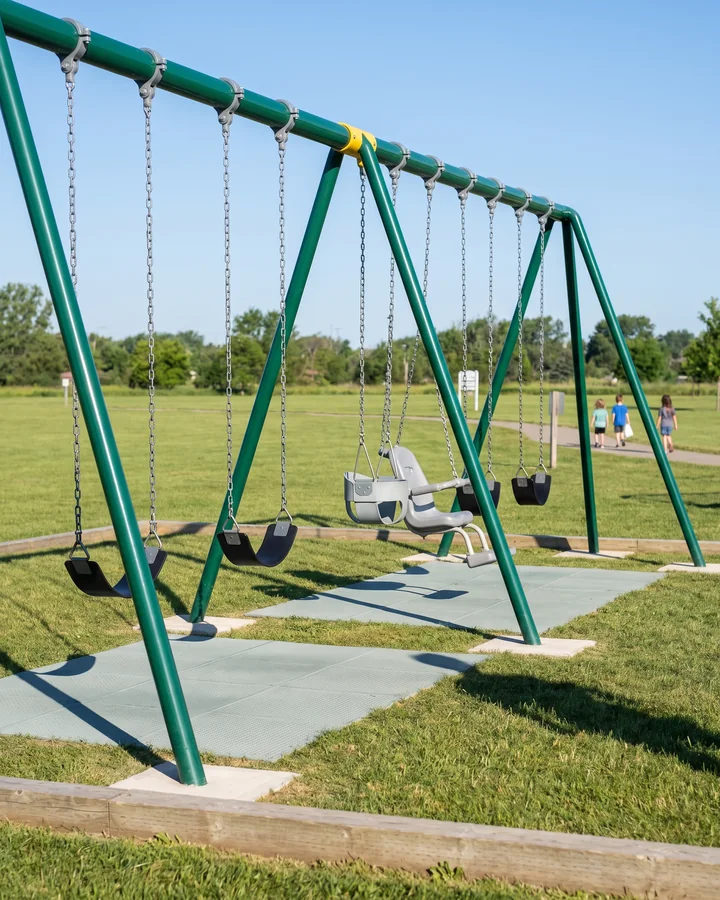
Open lawns and parks. Each end of the beam stands on two angled legs, spread at the ends of the bay, where there is room around the frame.
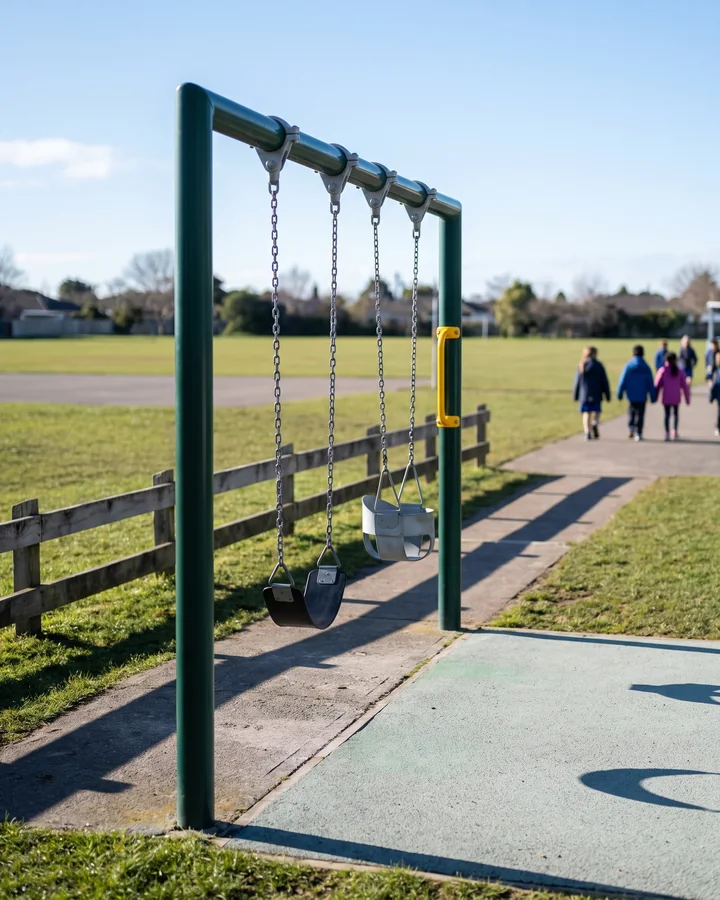
Paths, fence lines, tight sites. Upright posts carry the beam and take less ground at the ends, so the frame fits along a path, a fence line or between other pieces.

Frames are powder coated in RAL colors you choose to match your play structures.
What you get. Each swing frame appears on your layout with its frame type, bay count and a W structure number, such as W1, plus a single-item plan and elevation.
Beams and posts are the same Ø114 mm galvanized, powder-coated tube as our play structure posts, joined in welded saddle brackets with 304 tamper-resistant bolts.
A swing frame takes its load at a few points: where the beam meets the posts, where the hangers hold the beam, and where the chain meets the hanger and the seat. Here is how we build each one, from the top down.
Ø114 mm galvanized steel tube with a 3.0 mm wall. Brackets and legs are welded in our steel fabrication workshop, and every part is hot-dip galvanized and then powder coated before assembly. Cutting, welding and coating are on playground equipment manufacturing.
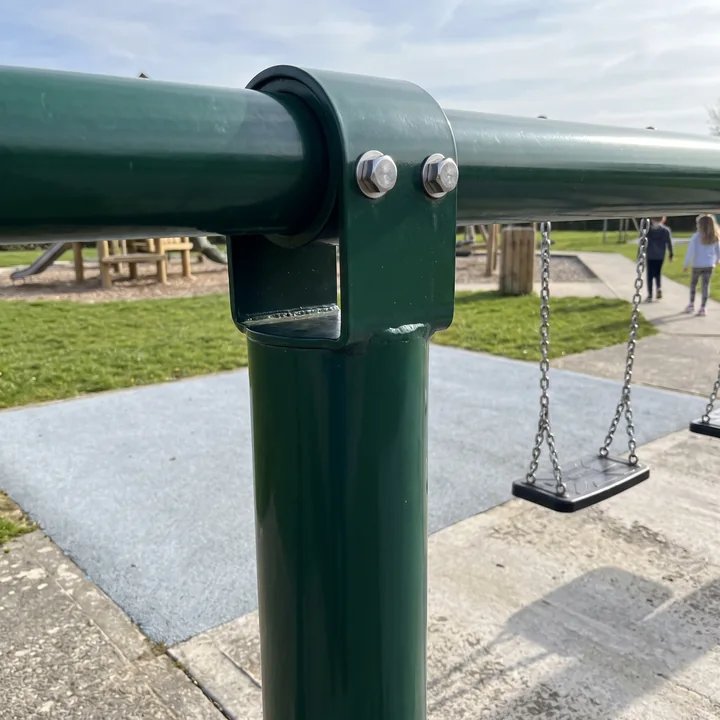
Welded at the top of each post or leg pair take the beam. The beam is fixed into the saddles with 304 stainless steel tamper-resistant bolts, capped, and bolted on site.
On 2- and 3-bay frames, the middle saddles carry the ends of two beams. Bolt positions and torque values are marked on the assembly drawing; security bits for the bolt heads ship in the spare hardware kit.
304 · tamper-resistant · capped · torque on the assembly drawingEach hanger is a galvanized steel housing with a , clamped around the beam with 304 bolts. The bearing carries the swing motion, so the chain doesn't wear against the beam.
Because the hanger clamps on from the outside, it comes off and goes back on without taking the beam out of its saddles.
See a hanger changed, beam in place →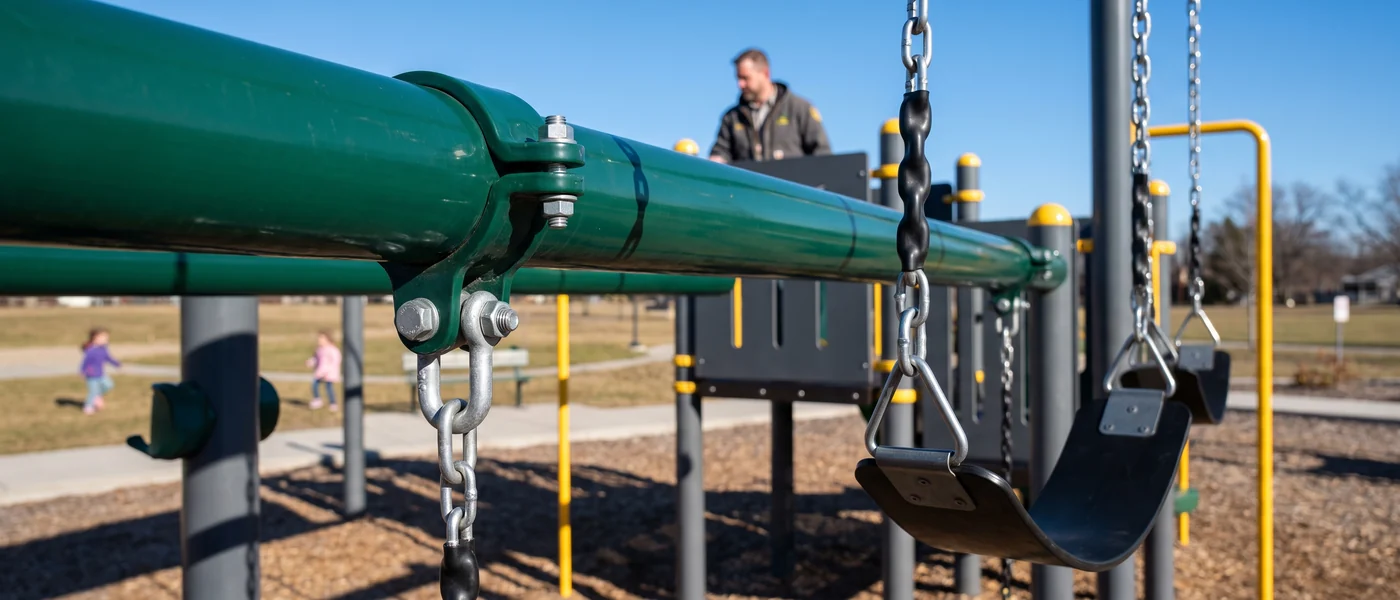
Chains are hot-dip galvanized. The plastisol coating covers the hand-hold length of the chain, where children grip it.
Hot-dip galvanized · plastisol gripjoin the chain to the hanger at the top and to the seat at the bottom. Every link in the swing line is closed, from the beam to the seat.
Every link closed · beam to seat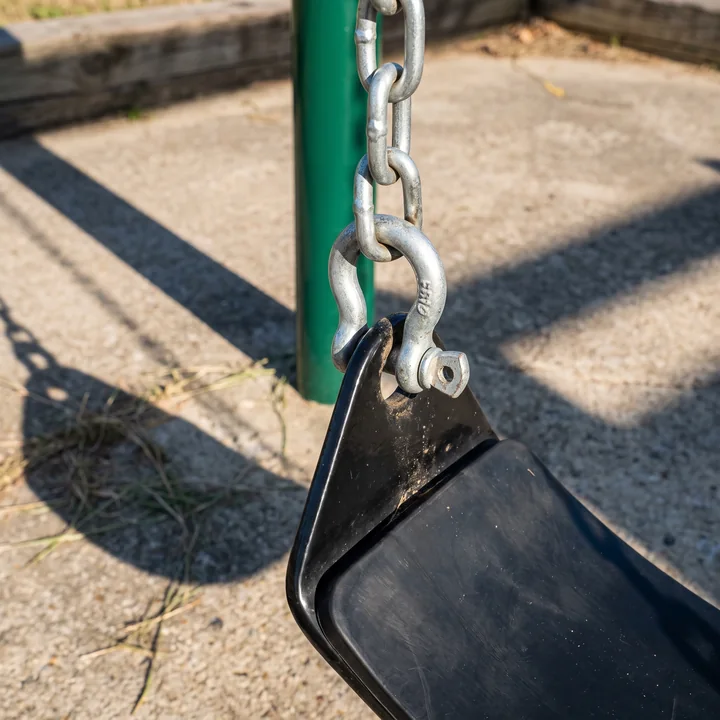
Belt seats are rubber with an aluminum insert. Toddler bucket seats and inclusive high-back seats with harness are partner-built and inspected by our QC against the drawing and spec before loading. Nest swings are made in our workshops.
Belt · bucket · high-back partner-built · nest in-house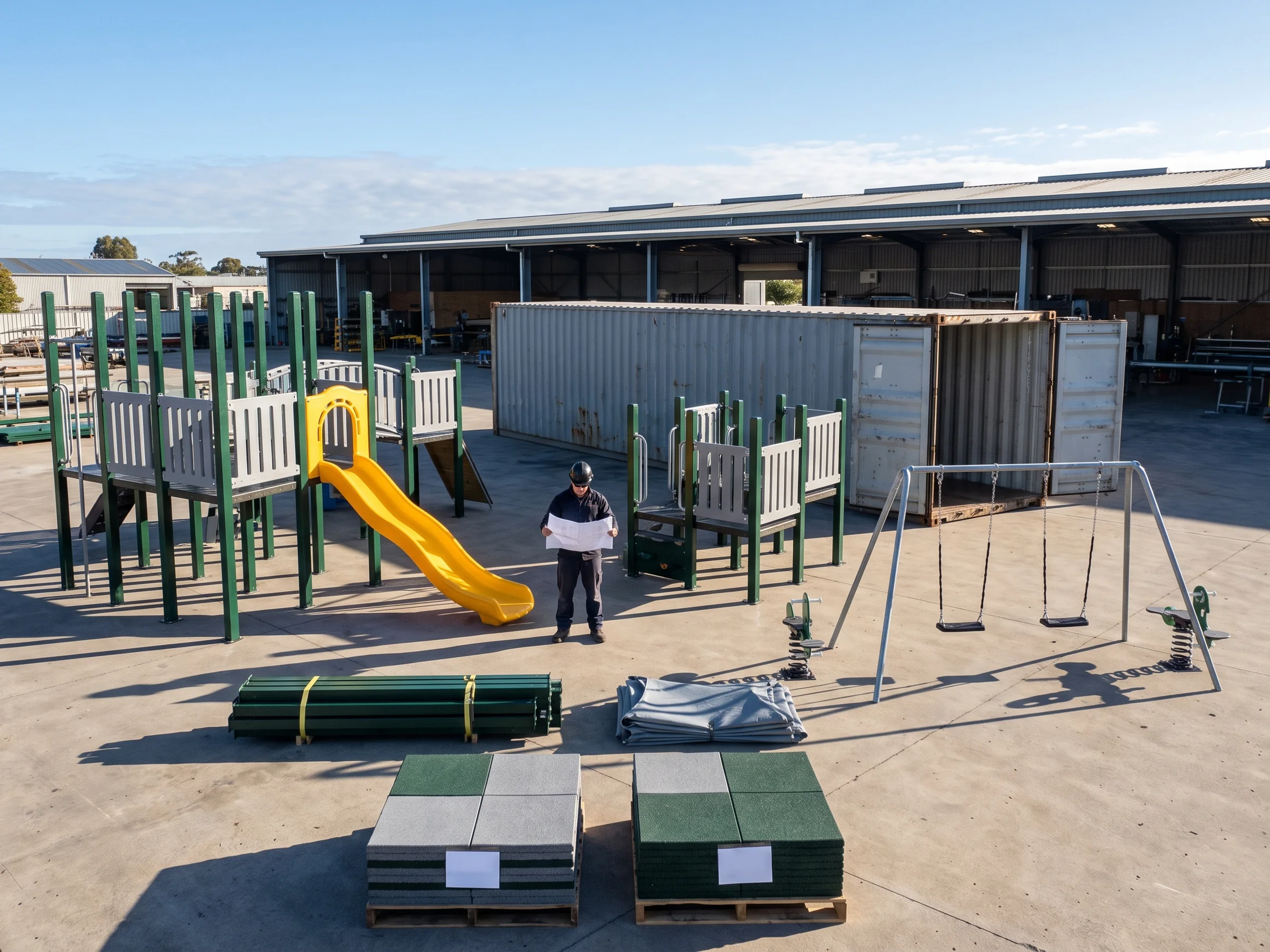
Swing frames are pre-assembled with your outdoor order, the same way as play structures. The yard team fits the beam into its saddles, clamps the hangers, hangs the seats and checks every connection. A failed part is corrected and refitted, and QC signs off before the frame comes apart.
The pre-assembly video shows close views of the saddle bolts, hanger clamps, shackles and part numbers. The pre-assembly process is on how we build playgrounds.
Seats are placed by age zone and by bay. The design office follows four rules when it lays out the seats on your frames.
Age zones. Toddler bays go in the 6–23 month or 2–5 zone they serve, belt bays in the 5–12 zone, and every frame carries an age-range label. Toddler bucket swings for centers are on preschool and daycare playground equipment.
| Frame | Bay | Seats | Part numbers | Age zone |
|---|---|---|---|---|
| W1 · A-frame | Bay 1 | 2 × toddler bucket | W1-011 · W1-012 | 2–5 |
| W1 | Bay 2 | 2 × belt | W1-021 · W1-022 | 5–12 |
| W1 | Bay 3 | High-back · own bay | W1-031 | Supported seating |
| W2 · A-frame | Bay 1 | Nest · own frame | W2-011 | Shared play |
Toddler and belt seats in separate bays, the high-back seat in a bay of its own on the accessible route, and the nest on a frame of its own.
| Frame | Bay | Seats | Part numbers | Age zone |
|---|---|---|---|---|
| W1 · straight-post | Bay 1 | 2 × toddler bucket | W1-011 · W1-012 | 6–23 months / 2–5 |
| W1 | Bay 2 | 2 × toddler bucket | W1-021 · W1-022 | 6–23 months / 2–5 |
The youngest zone only: toddler bucket bays, with the same part numbers and colors at every center.
| Frame | Bay | Seats | Part numbers | Age zone |
|---|---|---|---|---|
| W1 · straight-post | Bays 1–3 | 2 × belt per bay | W1-011 … W1-032 | 5–12 · grades 1–5 |
| W2 · straight-post | Bay 1 | 2 × toddler bucket | W2-011 · W2-012 | 2–5 · Pre-K |
Two frames on one campus layout, each in its own age zone, with the zone line drawn between them.
| Frame | Bay | Seats | Part numbers | Age zone |
|---|---|---|---|---|
| W1 · A-frame | Bay 1 | 2 × belt | W1-011 · W1-012 | 5–12 |
| W1 | Bay 2 | High-back · own bay | W1-021 | Supported seating |
The high-back bay sits on the accessible route, with accessible surfacing to ASTM F1951 from the path to the seat.
What you get. A seat schedule for every frame: frame number, bay by bay, which two seats hang in it, and their part numbers.
Select a rule to outline the bays it decides
Every swing frame on your layout is drawn with its seats, its use zone and its separation zone before it is quoted.
Seats · use zone · separation zoneA swing bay needs clear ground in front of and behind the beam, and at both ends of the frame. We draw it on your site plan before the frame goes into the quotation.
Use zone for each swing. The in front of and behind each bay, and the clearance at the sides of the frame, are drawn to the CPSC handbook values for that swing, or to EN 1176 where your project names it. Belt, bucket, high-back and nest swings each get the zone their type calls for.
The seat's travel in front of and behind the beam sets the front and back edges of the zone on the plan.
Front and back of every bay, sized for that swing.
At both ends of each frame.
Marked around each swing frame.
The side children approach from.
Covers the full swing path.
Every post and leg, shared ones too.
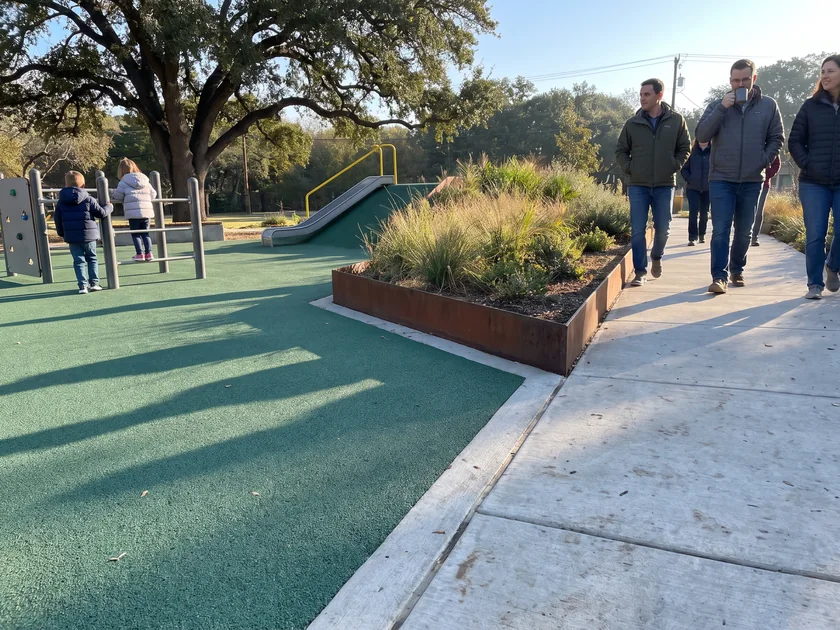
Separation zone and entry direction. The layout marks a around each swing frame and the direction children should approach it from, so the walking route to other equipment passes clear of the swing path. If you want a low fence or a planted edge along that zone, your landscape contractor builds it to the marked line.
Clash check. The design office checks the swing zones against play structures, slide exits, spinners, spring riders, paths, benches and fences. Where two zones overlap, the designer turns or moves the frame, splits a 3-bay frame into two, or switches an A-frame to a straight-post frame. The layout you receive is the version where every zone clears.

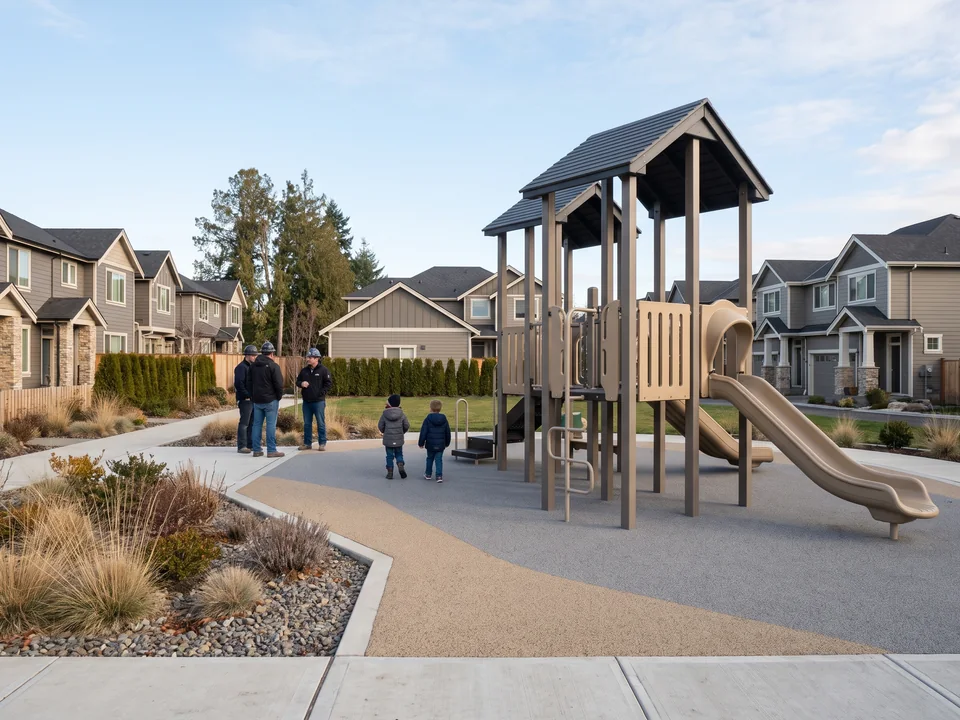
The swing use zone goes into the surfacing thickness zone plan and area table, with thickness set by the critical fall height, so surfacing covers the full swing path. Materials are on playground surfacing.
Every post and leg of every frame, including shared middle posts, is on the footing detail drawing, with the footing size shown on that drawing.
The site layout with each swing frame, seat mix, use zone and separation zone in place; a single-item plan and elevation per frame; and a design compliance statement for each item to the named standard. How the standards are applied is on playground safety standards.
| Seat | Material | Made by | Age zone | Hung | Reorder |
|---|---|---|---|---|---|
| Belt seat | Rubber with aluminum insert | Partner-built · QC inspected | 5–12 | Two per bay, belt bays | By part number |
| Full-bucket toddler seat | Full-bucket seat | Partner-built · QC inspected | Youngest children, daycare and 2–5 | Two per bay, toddler bays | By part number |
| Inclusive high-back seat | High-back seat with harness | Partner-built · QC inspected | Children who need support | Own bay | By part number |
| Nest swing | Rope net on a padded steel ring | Our rope line and steel workshop | Shared play, several children together | Multi-point, own frame | By part number |
One site can carry all four, each in its own bay or frame: belt bays for older children, bucket bays where toddlers play, a high-back bay on the accessible route and a nest swing for play together.
Every swing frame reaches the ground at its posts or legs, and every one of those points has a footing on your footing detail drawing.
Shared middle posts. On 2- and 3-bay frames, the middle posts carry two beams. They are drawn and numbered as their own positions on the footing detail drawing, so your installer sets them as the drawing shows.
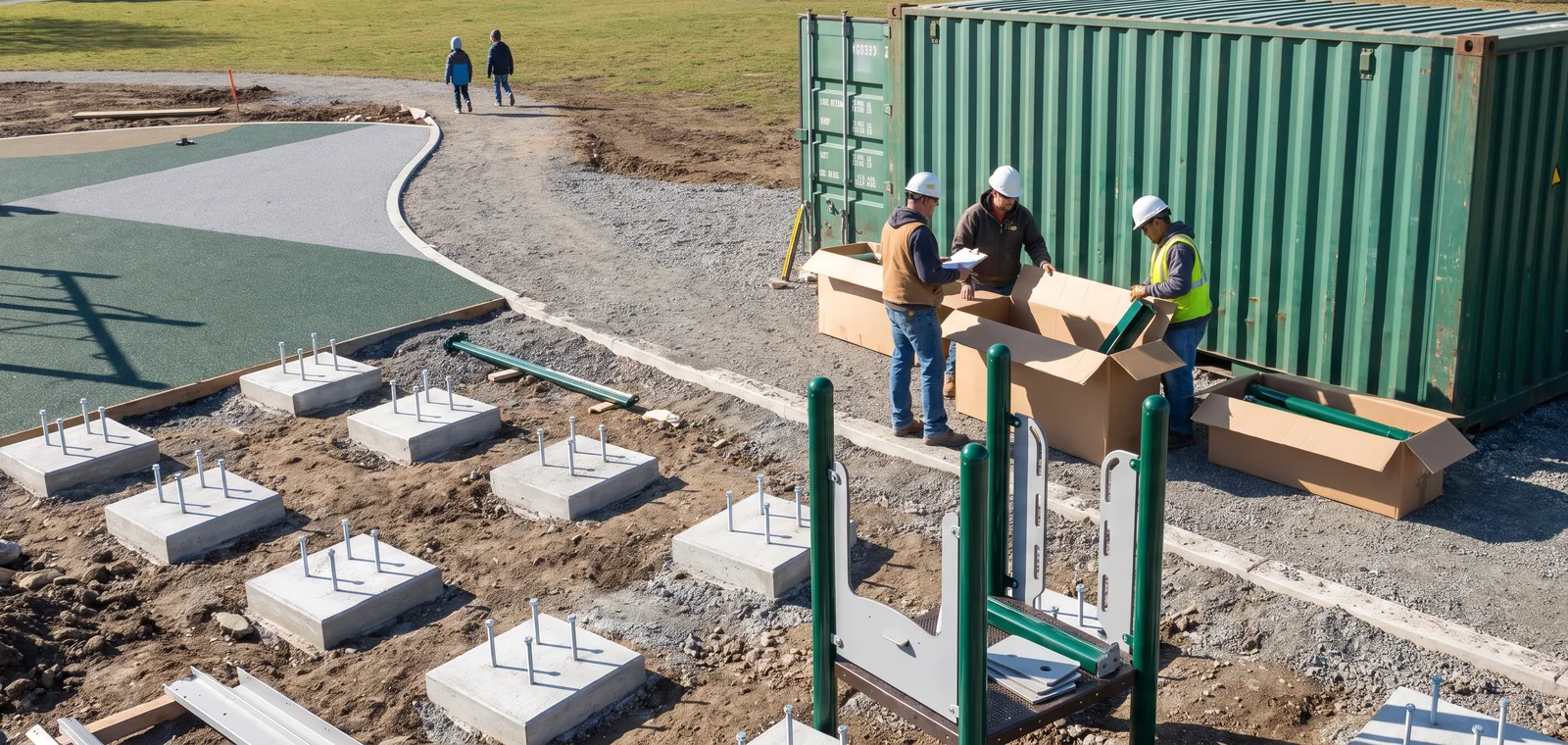
Swing posts and A-frame legs are set in concrete by default, per the footing detail drawing issued at drawing approval. The drawing shows the footing size for each post and leg.
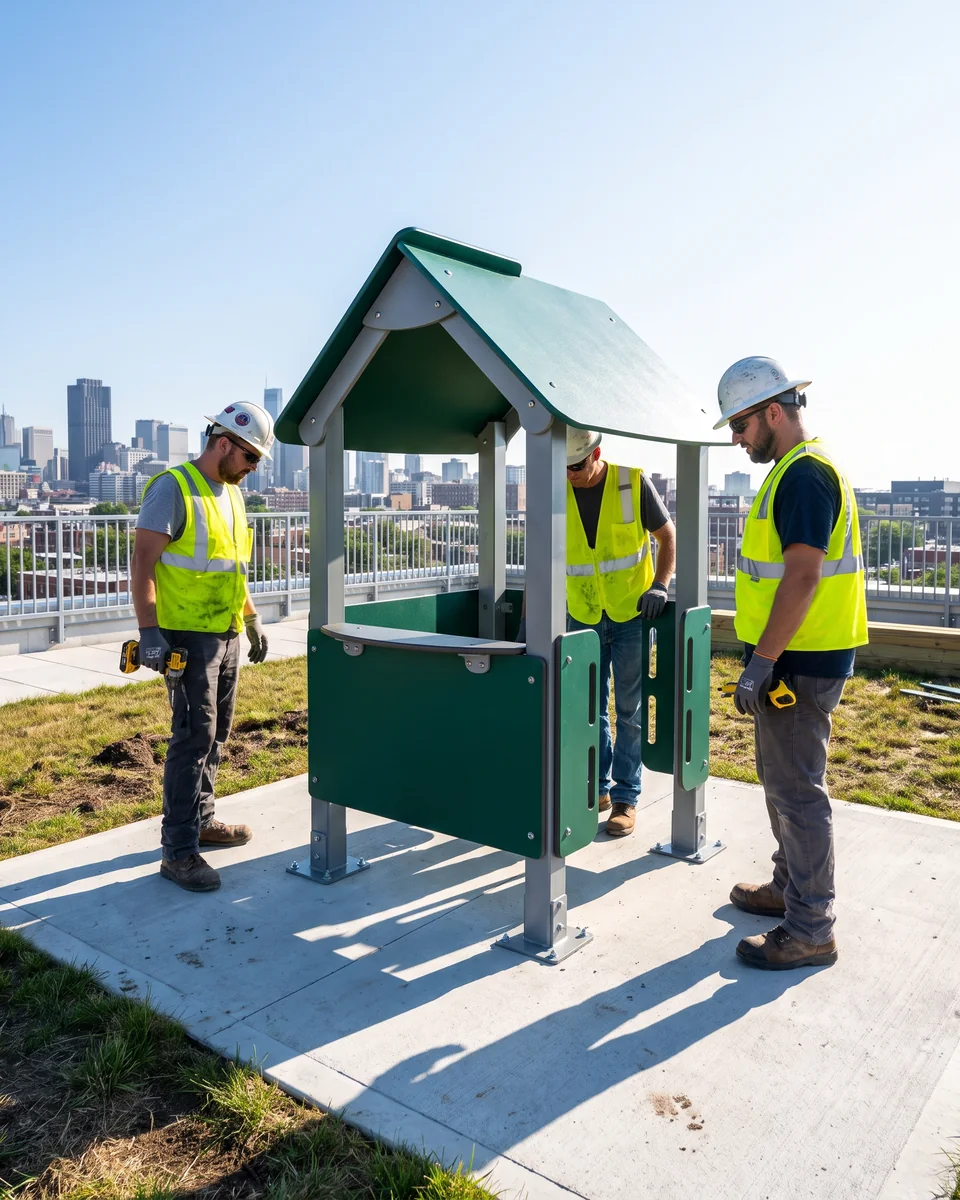
Where your site calls for it, frames can be ordered with anchor-bolt base plates, fixed per the same footing detail drawing. Slabs and rooftops are confirmed by your structural engineer.
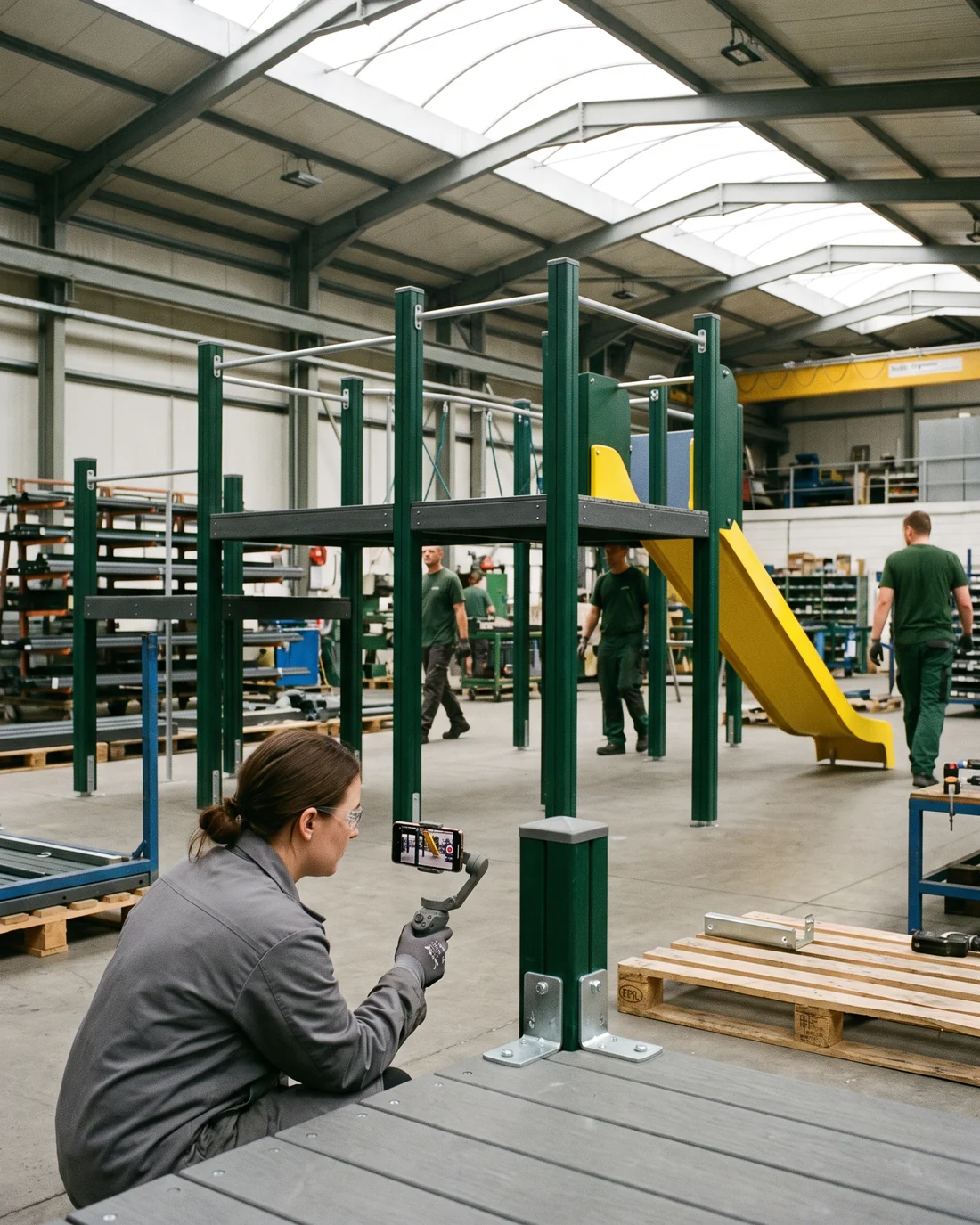
The video for your frame is cut from its own pre-assembly and disassembly, filmed in installation order with part numbers in frame.
We supply the frame, seats, anchoring hardware and footing detail drawings. Excavation, concrete and installation labor are by you or your local installer, with an optional on-site supervisor from our pre-assembly yard team.
We return a layout with each swing frame, its bays and its use zone drawn within 3 working days. Or message Anna on WhatsApp.
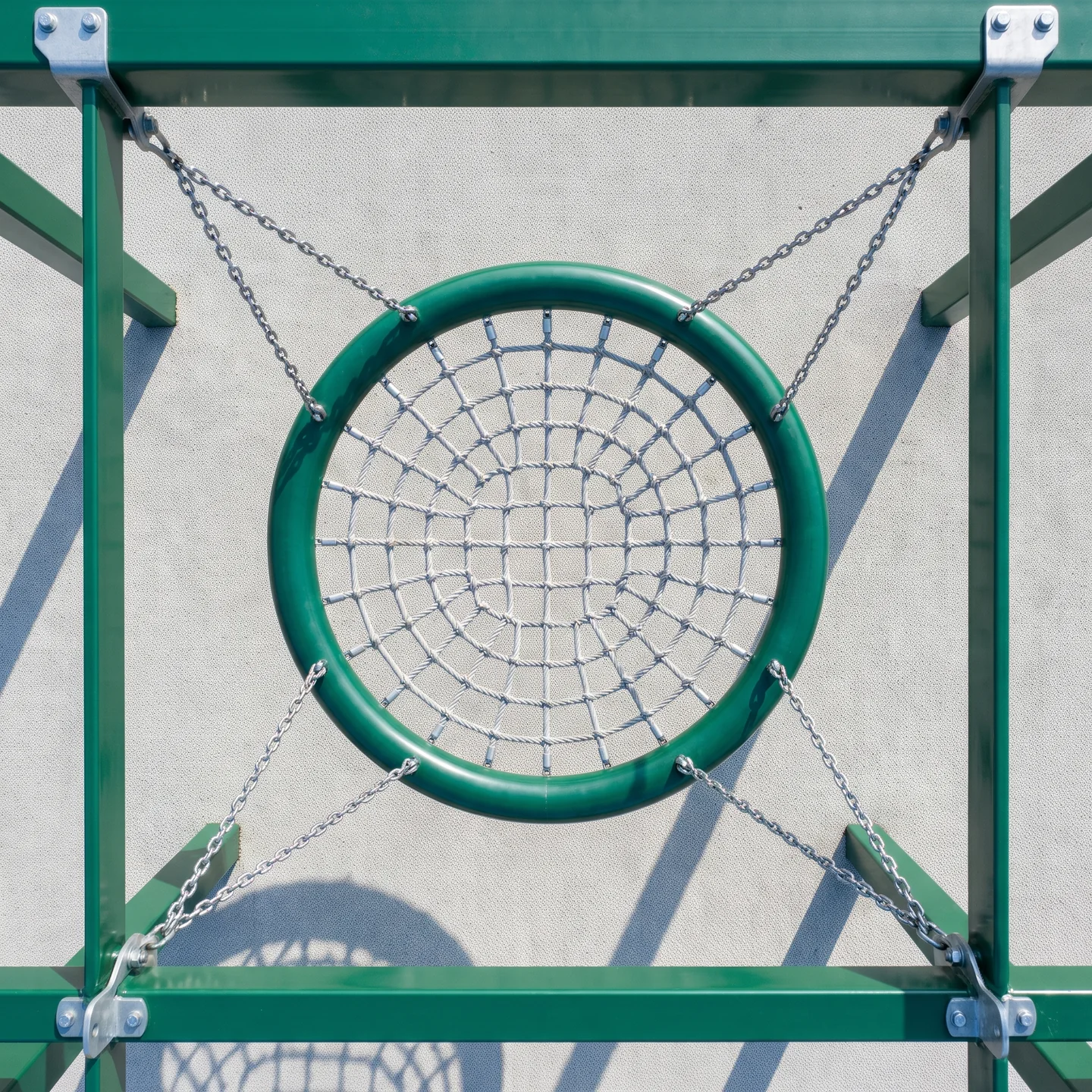
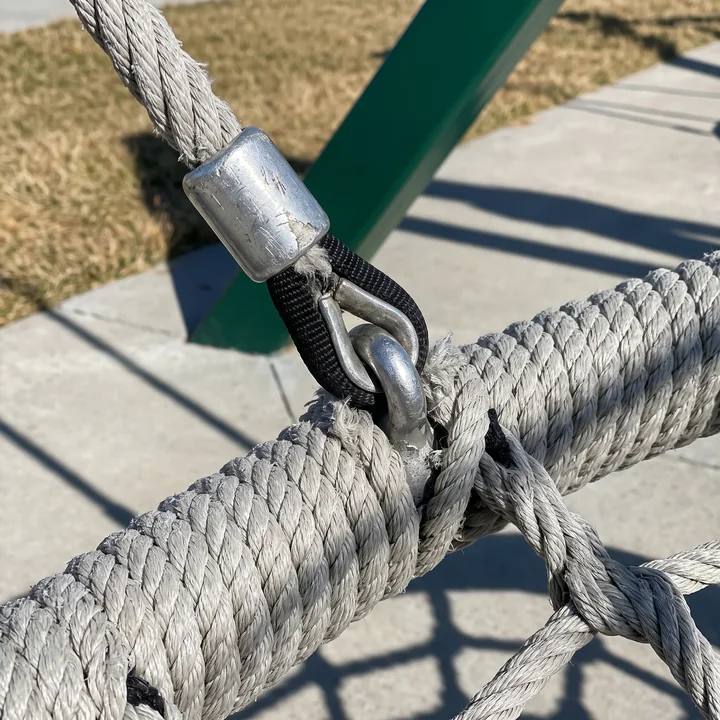
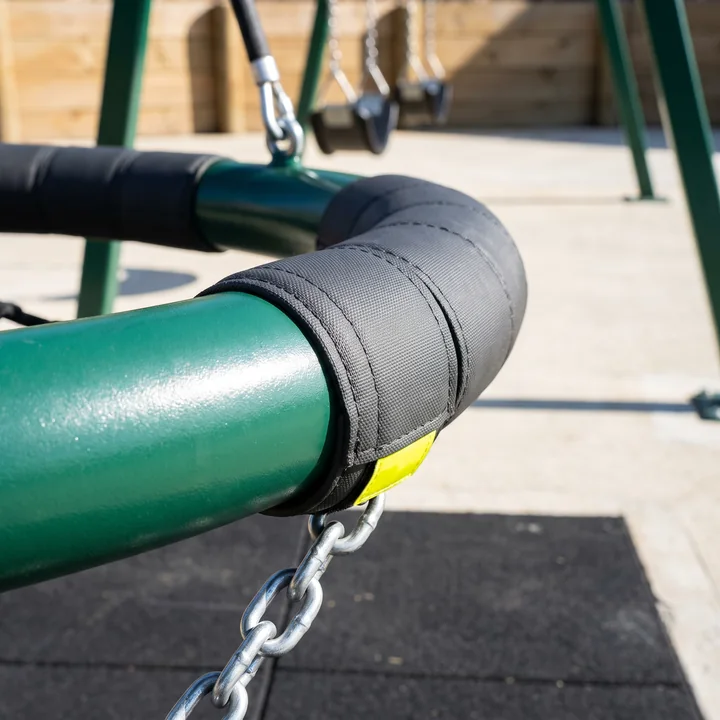
A nest swing lets several children swing together, or one child lie down in it. We make it in our own workshops.
A rope net from our rope line, in the same six-strand polyester rope with a steel wire core that we use for climbing nets, fixed with aluminum and nylon connectors.
The net is stretched on a steel ring from our steel workshop, and the ring is padded all round.
Multi-point hung from sealed-bearing hangers on its beam, with hot-dip galvanized chains, plastisol grips over the hand-hold length and closed shackles at every end.
A nest swing always stands on its own A-frame or straight-post frame in the same Ø114 mm steel, with its own use zone and footings.
What you get. A separate frame number on the layout, a single-item plan and elevation, and a nest, ring and hanging set numbered to that frame.
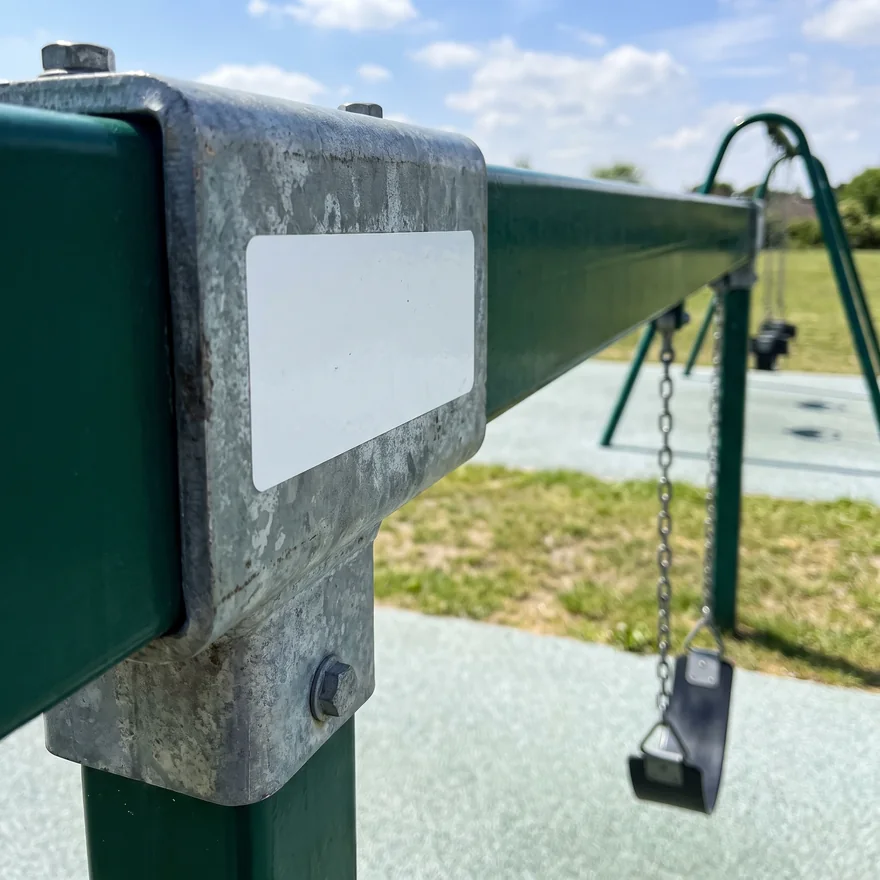
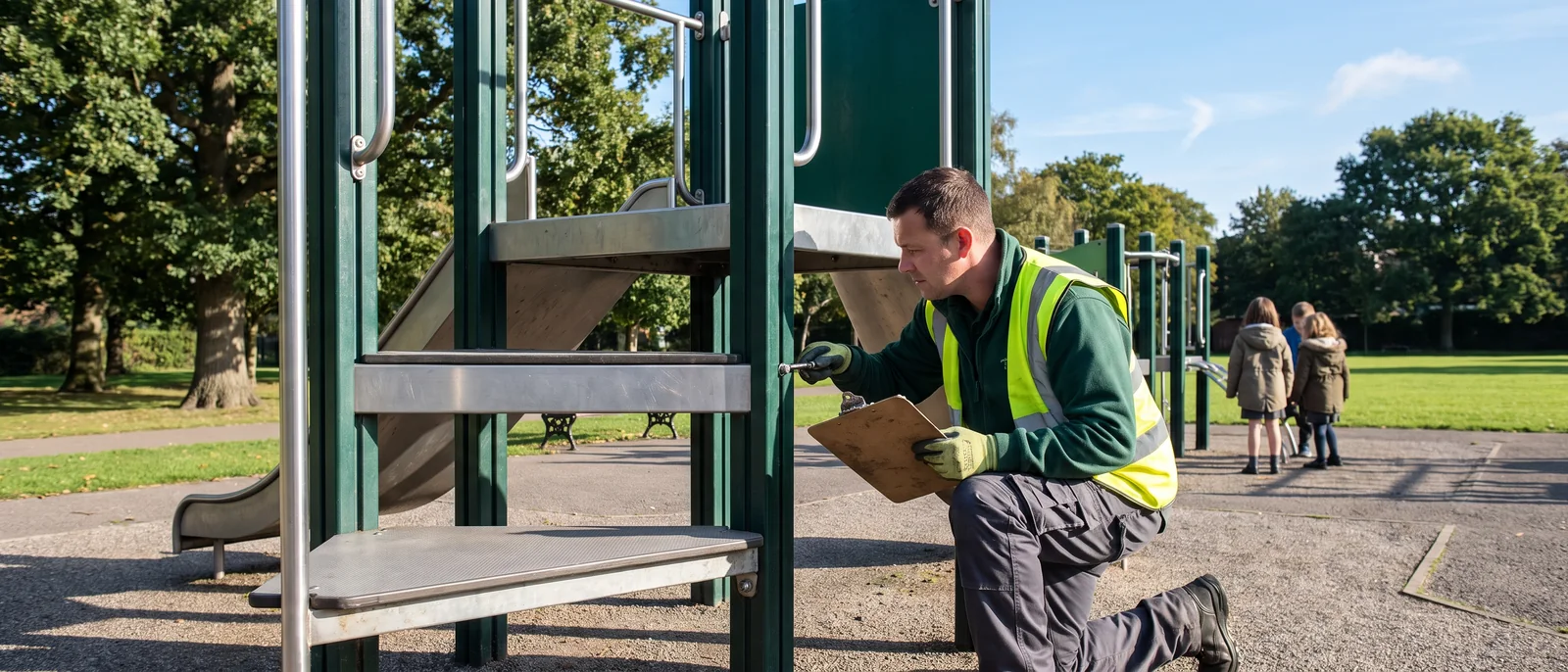
Hangers, chains and seats are the parts of a swing set that move and wear. Each carries a part number from the day it is made, so a replacement is matched to your frame.
Hangers, chains, shackles and seats carry W part numbers, such as W1-003, on the assembly drawing, the part list and the packing list. The pre-assembly video shows those numbers in frame on your own swing set. The installation drawing, part list and packing list are kept on file for every project.
The hanger is clamped around the beam with 304 bolts. Your maintenance crew undoes the clamp, takes the old hanger off, clamps the new one on and rehangs the chain with its shackle.
The beam stays in its saddles the whole time. The security bits for the tamper-resistant heads are in the spare kit shipped with your order.
The seat is joined to the chain with closed shackles, so a seat swap is a shackle swap at the bottom of each chain. Reorder the same seat, or a different seat type for that bay if the seat rules for the bay still hold.
Reply within 24 hours on business days
New frames go on the same project file, so part numbers and RAL colors follow the original.
Maintenance checks for hangers, shackles and seats are in the inspection and maintenance guide on playground equipment installation.
Every swing frame is made to your approved drawing, including a single 1-bay frame, in 20–30 days after drawing approval, and pre-assembled with the rest of your outdoor order.
Partner-built seats are inspected by our QC against the drawing and spec before loading, and everything goes into the same container plan as your structures and surfacing.
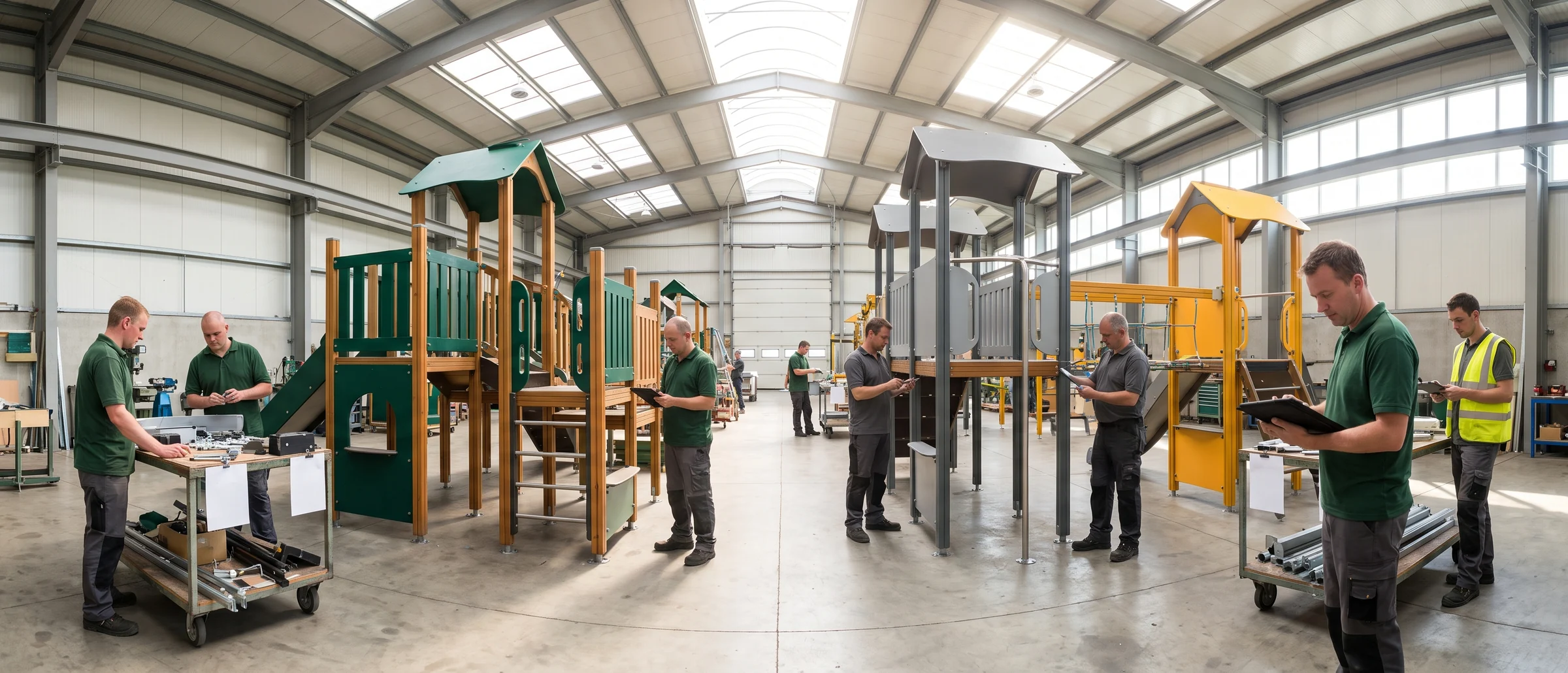
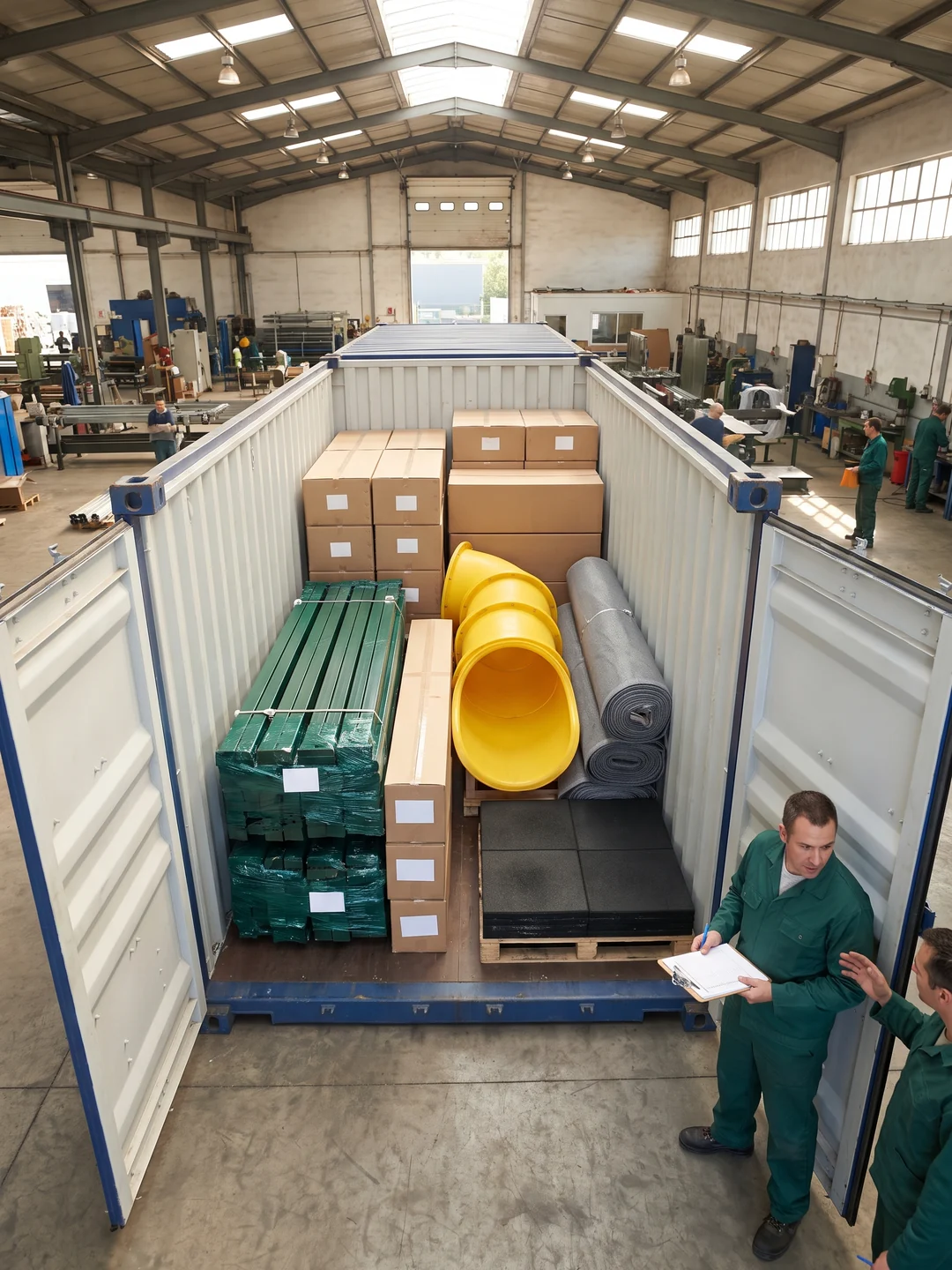
We supply parks departments, school districts, daycare and preschool groups, dealers and installers who need a swing bay beside a play structure, a replacement frame on an existing site, or swings as part of a full outdoor order.
A-frame swing bays with belt, toddler and high-back seats, nest swings on their own frames, and single-item plans with compliance statements for the approval file.
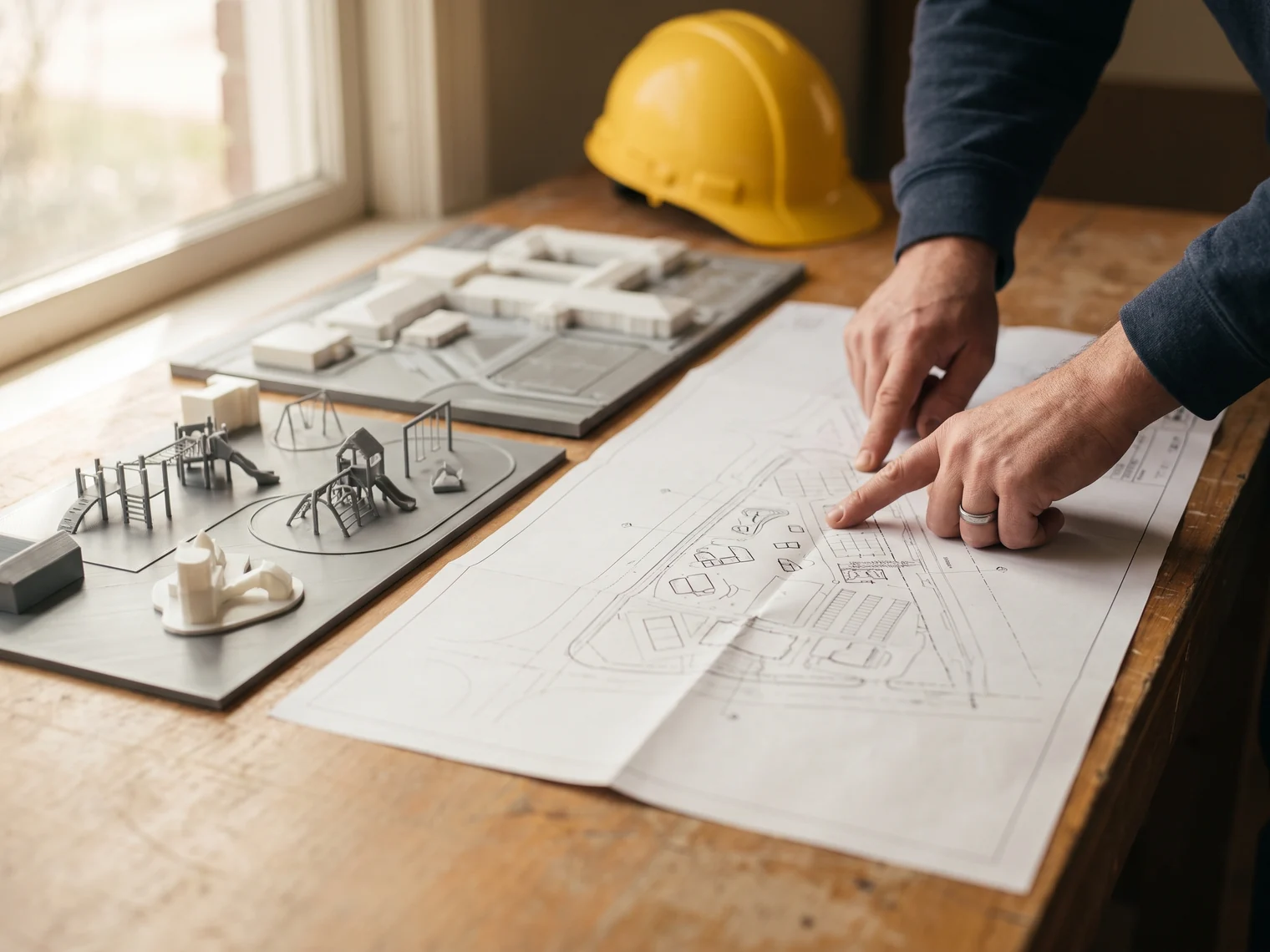
Straight-post frames along the edge of the yard, belt bays for grades 1–5 and toddler bays for Pre-K, on one campus layout. More on school playground equipment.
Toddler bucket bays in the youngest zone, with the same part numbers and colors across every center.
Frames, seat schedules and layouts issued unbranded or under your brand, with projects registered under your name. More on wholesale playground equipment.
One footing detail drawing covering every swing post, an assembly drawing set with torque values marked, and pre-assembly video of each frame's connections.
Send to Anna · WhatsApp +86 177 0272 7677 · or the form below